Humanities Hero: Tyrell Anderson
August 19, 2026Originally founded in 1906 just steps away from the gates of United States Steel’s mill, Gary, Indiana, has gone through significant change — along with the rest of northwest Indiana — as a…
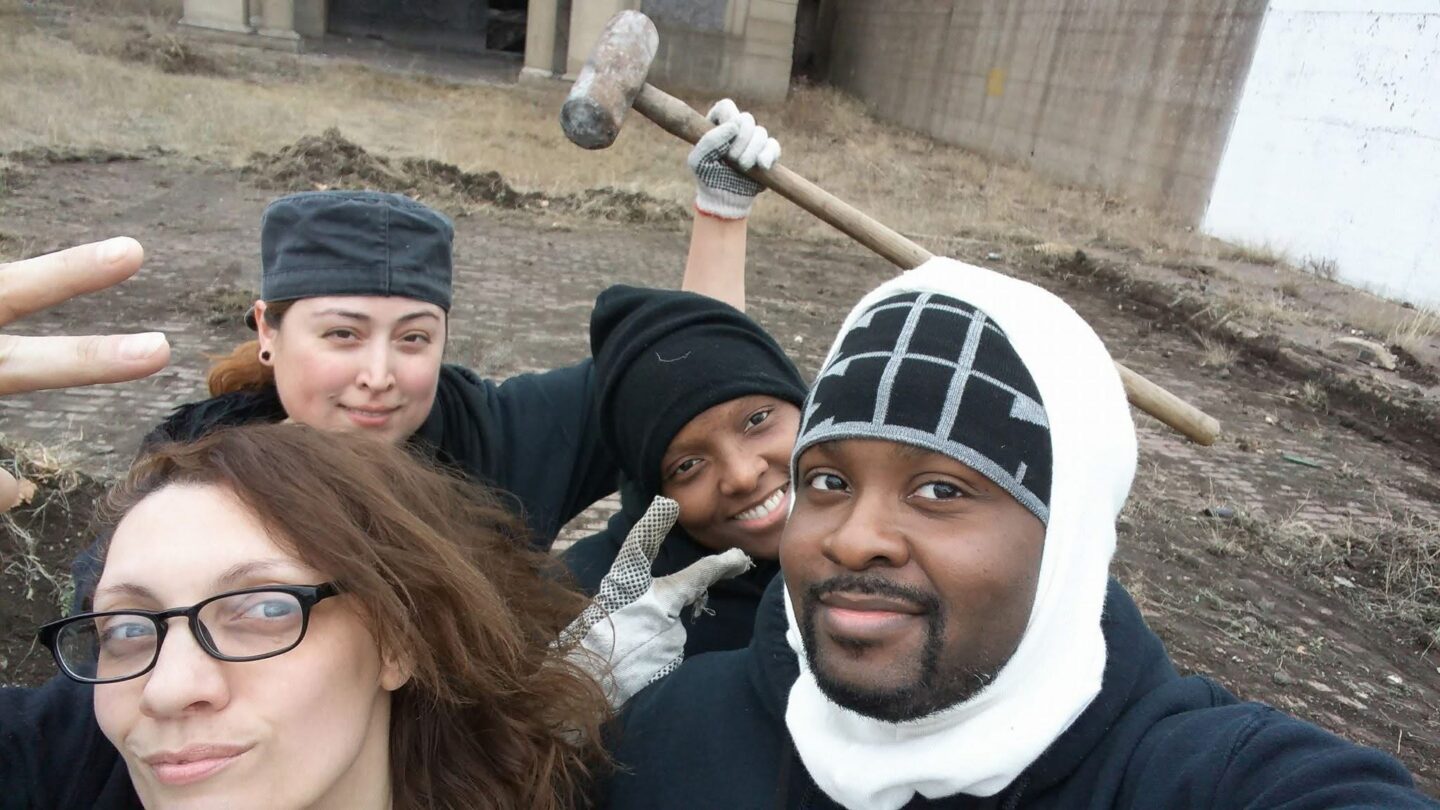
Originally founded in 1906 just steps away from the gates of United States Steel’s mill, Gary, Indiana, has gone through significant change — along with the rest of northwest Indiana — as a result of economic boom and drought. As manufacturing in the “Region” tumbled in the latter half of the 20th century and the population began to decline, many factories, schools, and hospitals became abandoned. Tyrell Anderson has never seen these spaces as urban eyesores but as an opportunity for community building and artistic inspiration.
Born and raised in Gary, Anderson says that one of his earliest memories of urban exploration was visiting the Bear Brand Hosiery Factory with his father. “I remember being fascinated by the scale of the building and wondering about the people who once worked there,” he said. After attending college at Purdue University, Anderson returned to begin his career at U.S. Steel and used those abandoned structures as backdrops for his creative hobbies.
“I wasn’t trying to be an urban explorer,” said Anderson. “I was simply curious about places, the stories they held, and I wanted to make my own.”
That calling led Anderson and a small group of friends to found Decay Devils, a history and preservation advocacy organization based in Gary. Established in 2015, the Decay Devils raise awareness and funds for various historic preservation projects across northwest Indiana. They collaborate with local leaders and engineers to restore old buildings and preserve artifacts. And while they carry out this important work, they “still play in abandoned buildings,” as their website notes.
Anderson stresses, however, that Decay Devils’ work does not focus solely on empty urban spaces, which are just one component of the larger story of northwest Indiana. He points out that the organization also works across the Region on community storytelling events, exhibit design, public art, and photography to illustrate the connections between human stories of success, family, labor, and the physical culture of the city.
Over the past six years, Indiana Humanities has supported several of Decay Devils’ placemaking projects. These include the Gary Landmarks and Art Guide, a booklet and online guide that details the historical significance of Gary’s downtown buildings and murals; Unapologetic, a photography exhibition and conversation series that celebrated the people of northwest Indiana and explored ways to redefine the future; and the Gary Downtown Experience, a series of activities that helped participants learn about the history of Gary, appreciate its diversity, and celebrate its culture. This year, with assistance from a Historic Preservation Education Grant offered by Indiana Humanities and Indiana Landmarks, Decay Devils created five additional landmarks and art guides for Crown Point, East Chicago, Hammond, Michigan City, and Whiting.
“Buildings matter because they are physical reminders of the people who came before us, but the traditions, stories, and communities connected to those places are equally important,” Anderson said. “The stories of steelworkers, immigrants, artists, educators, business owners, and families who helped build northwest Indiana. If we lose those stories, we lose part of our collective identity, and I believe every neglected place has a story.”
For Anderson, this sort of work is especially important in a place like Gary as it inherits the typical narratives of post-industrial, diverse Rust Belt cities from people who do not live there. According to him, many of the region’s own residents view the vacant, deteriorated buildings that dot the city as nothing more than another problem. Part of his mission is to encourage onlookers to acknowledge these challenges but recognize something deeper beneath the rubble: celebrations of resilience, creativity, and inspiration.
“Too many conversations focus exclusively on loss, decline, or what used to be. We believe preservation gives communities the opportunity to tell a fuller story,” he said. “The goal is always the same: helping people see value in places that others may have forgotten.”
One of Decay Devils’ major initiatives is the Gary Union Station restoration project. Union Station, built in 1910 to serve two interstate rail lines, has been closed for more than half a century. After several beautification projects installed outdoor lighting and almost a dozen murals, the group is hoping to transform the space into a mixed-use social hub for artists, craftspeople, and entrepreneurs. Beyond that, Anderson hopes that Decay Devils continues to serve as a connector for residents of the present to the place makers of the past and future.
“Preservation is often misunderstood as being focused on the past. For me, preservation is really about the future,” he said. “When we preserve a building, document a story, create public art, or share local history, we are helping future generations understand who they are and where they come from. We are creating a stronger foundation for the communities that come next.”