Grantee Spotlight: Archaeology Program Series at Elkhart County
June 24, 2026Today, Elkhart County parks are dotted with wildflowers and winding walking trails. Visitors use the land for hiking and mountain biking, enjoying the scenery, and even cross-country skiing in the…
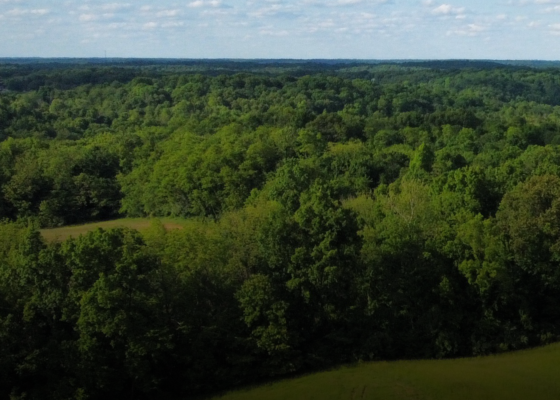
Today, Elkhart County parks are dotted with wildflowers and winding walking trails. Visitors use the land for hiking and mountain biking, enjoying the scenery, and even cross-country skiing in the wintertime. Around 15,000 years ago, though, this same land was crossed not by mountain bikers and birdwatchers but by nomadic people from the ancient Paleo period.
With the support of an Indiana Humanities Mini-Grant, Elkhart County Parks and the Elkhart County Historical Museum (ECHM) are bringing the Paleo era to life with an archaeology event series. The series uncovers the history and daily lives of the people who lived in today’s Elkhart County during the end of the last Ice Age.
The series was spearheaded a year ago by Jenifer Blouin Policelli, the ECHM’s curator of education, with the goal of teaching students about archaeology. What began in 2025 as a single event — Archaeology 101 — now includes three unique programs targeted to different audiences.
Julie Parke, the ECHM’s museum administrator says the expanded series is designed to “present a continuum of access to archaeology and the lessons that can be gained from it.”
At Archaeology 101, the first event in this year’s series, students learned about the life of an archaeologist through hands-on experience — handling real historical artifacts and digging through excavation activities.
The second program in the series was a daylong workshop for teachers. The Project Archaeology Educator Workshop, part of a national heritage education program, was designed to help local educators discover how archaeological inquiry can serve as a way to teach history, social studies, and STEAM subjects.
The final program, Paleo Night, scheduled for July 10, is a family-friendly event aimed at teaching guests how people lived and interacted with their environment before recorded history.
According to Parke, the event will include a variety of activities and demonstrations. Participants will learn how to start fires, tan hides, forage, build shelters, use an atlatl (a tool for throwing spears), create “cave” art, excavate like an archaeologist, and blend their own trail mix. The evening will also include ask-an-archaeologist sessions. “The goal,” Parke says, “is for visitors to get a sense of the nomadic, hunter-gatherer lifestyle that predated the later dominance of agriculture.”
As they walk on the very same ground that the Paleo people traveled thousands of years ago, Parke says she hopes that the visitors who attend the archaeology program series learn to understand and appreciate how people lived before us. To Parke, the series is meant to “present a continuum of access to archaeology and the lessons that can be gained from it.”